Understanding milk
Milk: a natural, fragile product
Milk is a living, perishable substance, composed of water, lactose, fats, proteins, minerals, and diverse microorganisms. It is particularly sensitive to air, light, and ambient heat exposure. The dairy sector must manage this fragility to produce safe, healthy, quality dairy products.
Farmers, processors and distributors form the links of an organised and united chain of expertise working with a common goal: ensuring consumers the quality and safety of dairy products.
From production through commercialisation: a closely coordinated process
From the farm to the plate, each step involves specific ancestral know-how optimised with new technologies that provide further guarantees to consumers. After the cows have been milked, the milk is collected within 48 to 72 hours and follows different manufacturing circuits, adhering to a precise protocol carried out under close supervision. At each step, controls and analyses certify strict compliance with the dairy sector’s quality chain and European hygiene standards.
Milk: a raw material with multiple possibilities (in French language)
With its rich components and unique transformation properties, milk is the source of a wide variety of products emblematic of French gastronomy.
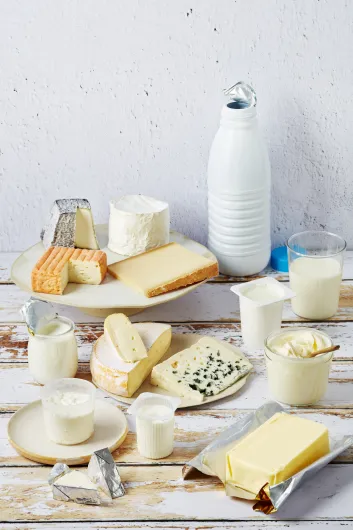
In France, there are more than 1500 dairy products referenced, classified into three categories: milk (raw, fresh, pasteurised, sterilised, powdered, skimmed, semi-skimmed, whole…), fresh dairy products (fermented milk, yoghurts, cottage cheese…), and cheeses (soft, bloomy rind, pressed, blue-veined, melted…). Butter and fresh cream, also derived from milk, belong to the family of fats.
Adaptable to a diverse range of tastes, the multiple variations of dairy products are appreciated both for their flavour and their nutritional properties.