
Quality: the DNA of the dairy sector
Using local resources to produce milk that is in compliance with European hygiene standards, with guaranteed levels of fat and protein content, and suitable for processing: this is our daily challenge.
Milk is a fragile, living product; food safety is therefore a priority for the dairy sector. Starting on the farm and continuing all the way through to point of sale, professionals apply stringent hygiene practices and adhere to a strict protocol to control milk quality. This ensures that at the end of the chain consumers receive safe, healthy, quality dairy products.
Quality at the farm
Milk paid for quality
While producers are now required to comply with strict European standards, milk quality has been monitored in France for over 50 years. In 1969, the Godefroy law established a standard of quality and an incentive payment system for farmers. Farmers receive a higher or lower price depending on the composition of their milk (fat and protein content) and its bacteriological quality. Regular analyses are therefore conducted on all farms by independent interprofessional laboratories.
En savoir plus sur le paiement à la qualité du lait
Farming conditions: guarantees of food safety
The hygiene and safety of milk is a key priority for farmers. Farmers closely manage several parameters, including the health and diet of their herds, the cleanliness of the farm and equipment, the hygiene measures during the milking process, and the storage of milk under rigorous conditions that respect the cold chain.
Découvrez nos actions en matière de sécurité sanitaire
The Charter of Good Breeding Practices
Created in 1999, the Charter of Good Breeding Practices is now a true professional standard for French cattle farming, adhered to by over 9 out of 10 dairy farmers in France. The charter defines objectives to be achieved – and areas for improvement – in seven distinct domains: traceability, animal health and nutrition, hygiene in milk production, social sustainability, environmental protection, and animal welfare.
The Charter of Good Breeding Practices allows farmers to engage in a dynamic of progress, essential for ensuring the future of farms and the sector. Since its inception, it has evolved to adapt to new challenges and practices in the sector, and to respond to societal expectations.
En savoir plus sur l'élevage laitier
Milk collection: a key step in the dairy chain
Milk collection is an essential link of the dairy chain. To ensure its success, producers and processors work hand in hand following a strict protocol. Hygiene, cold chain, traceability, deadlines: nothing is left to chance, ensuring that the milk arriving at the dairy plant is flawless.
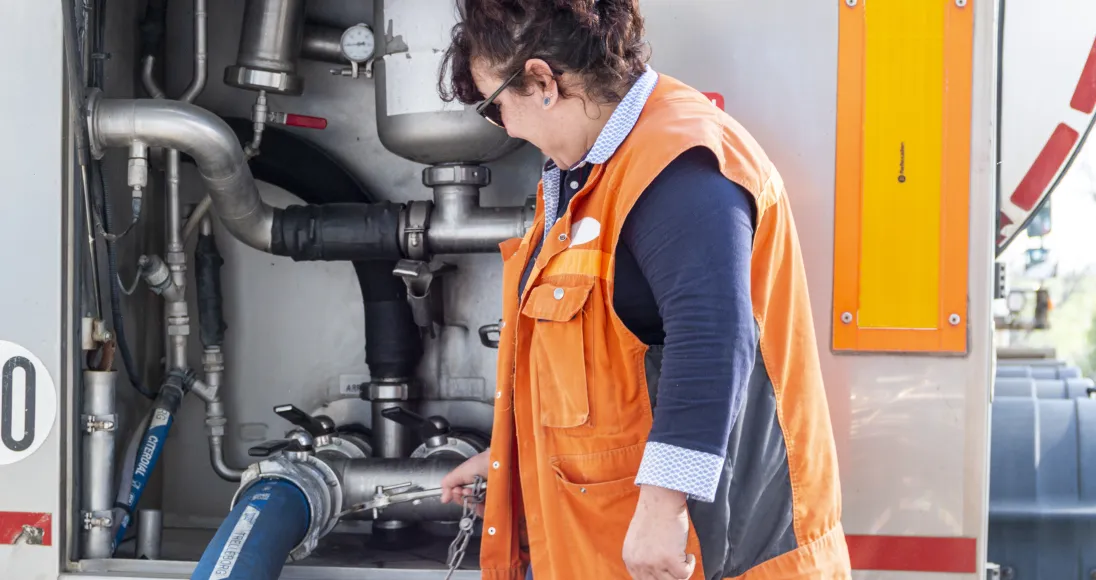
After milking the cows, farmers store the milk in refrigerated tanks at 4°C, which maintains the beneficial flora of the milk and prevents the development of bacteria. Every day or every other day, without interruption, an isothermal refrigerated tanker truck collects the raw milk and transports it to the dairy plant. Organised by the dairy processor, a collection route never exceeds more than three hours, in order to preserve the properties of the milk.
During each collection, a milk sample is taken and analysed the same day or the next day by an accredited independent laboratory responsible for certifying the quality of the delivered milk.
Interprofessional laboratories: milk quality control
Created following the Godefroy law of 1969, interprofessional laboratories analyse the composition and quality of milk according to precise and standardised technical methods and procedures defined by the Cniel. They thus ensure permanent quality control of the milk supplied to dairy processors by producers.
Farm milk is also tested at least three times a month. Approximately ten criteria are analysed, including the number of germs and the fat and protein content. These criteria impact the price paid to producers: the higher the quality of the milk, the higher its price.
Additional samples are systematically taken and analysed by the dairy processors’ own laboratories during the milk’s transformation process in the dairy.
There are 13 laboratories located across France for testing milk quality. Approved by the French Ministry of Agriculture, they are independent and often organised as non-profit associations. Each is managed by an interprofessional board of directors bringing together milk producer, dairy cooperative, and private dairy company representatives.
Closely monitored milk processing
The guarantee of quality and food safety for milk and dairy products continues from the farm to the processors.
Upon arrival at the dairy plant, new milk samples are taken and analysed. Depending on the product, the milk is also subjected to treatments such as pasteurisation or sterilisation, intended to eliminate any potential pathogenic microorganisms.
To prevent the quality of the milk from deteriorating during processing, dairies apply the HACCP (Hazard Analysis Critical Control Point) method. This involves identifying and assessing hazards at each stage of production to better control them. Control points are thus established throughout the chain to certify the sanitary quality of the processed milk through analyses conducted either internally or by independent external organisations. In case of non-conformity, corrective measures are immediately applied to prevent entire batches from being compromised. No dairy product leaves the company without the quality of the milk guaranteed.
Dairies are also equipped with a health control plan that is monitored and validated by the government. Validation is essential to allow each company and cooperative to operate and market their products. This constant monitoring enables the French dairy sector to offer dairy products that meet the highest standards of quality.
In line with its quality requirements, the Cniel has also established international health monitoring. It supports research that allows for better knowledge of emerging or re-emerging biological and chemical hazards and the prevention of health risks.
Quality at the point of sale
Upon entering the distribution circuit, the products continue to be strictly monitored. In stores, internal controls are implemented by distributors to ensure that the products are preserved at the correct temperature and that hygiene measures – such as using gloves to handle cheeses – are properly followed. Audits are also periodically conducted at the supplier level.
Upon purchase, the safety of dairy products is in the hands of consumers, who must transport and store them properly, respecting the cold chain and hygiene practices. Consumers are advised to follow the storage and consumption instructions indicated on the packaging: dates, temperature, etc. If needed, the manufacturer can be contacted via a toll-free number mentioned on the packaging.
The labeling of milk and dairy products reflects the commitment of the dairy sector to inform consumers clearly and transparently about its products.
If a case of non-conformity is identified at the processor or point of sale, the product is immediately withdrawn and recalls are issued to consumers.
Quality milk for a variety of quality French dairy products
Milk quality does not only refer to hygiene and safety. It also encompasses the suitability for processing, as well as all of the nutritional and organoleptic properties.
The quality of milk and dairy products in France derives from a long tradition of expertise and innovation, borne from a desire to preserve milk for later consumption. The various recipes and processing techniques developed over time have resulted in a great diversity of dairy products. Today, there are no fewer than 1500!
This diversity of dairy products - along with their renowned quality – plays a key role in French consumer choices. They are an undeniable symbol of French gastronomy and culture.